
This National Cybersecurity Awareness Month, Bit-Wizards advises Northwest Florida businesses to be on high alert for Business Email Compromise (BEC), a cyber threat that uses impersonation and social engineering to trick employees into sending money, sharing sensitive information, or granting access to company resources.
In a recent MSN article, BEC was identified as the costliest per-incident form of cybercrime affecting businesses, with nearly 25,000 falling victim to these attacks in 2025, resulting in more than $3 billion in losses. Among the states with the highest number of reported business cybercrime victims was Florida, recording 2,687 incidents, trailing only California and Texas.
While many companies picture cyberattacks as sophisticated hacks, BEC often begins with a simple email that appears to come from a trusted executive, coworker, vendor, or customer.
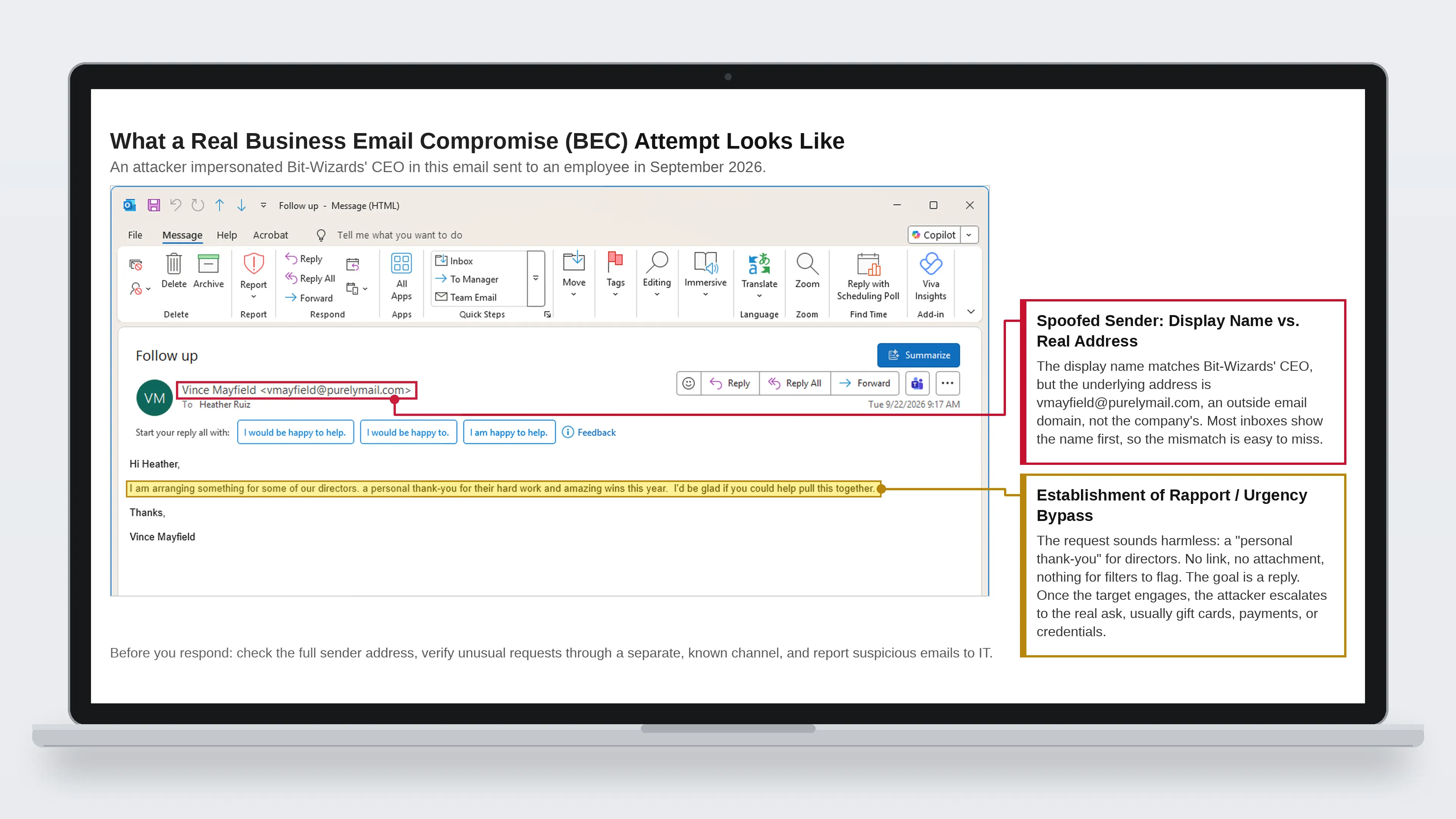
It’s a reality that Bit-Wizards recently encountered when an attacker impersonated its CEO and sent a seemingly harmless request to an employee. The message addressed its recipient casually, used a professional tone, and created a sense of urgency, making it the type of communication organizations see every day.
Our employee recognized the signs and reported this email to IT immediately, so while this attempt was unsuccessful, these attacks often work because they exploit trust. The email looks legitimate, their request sounds reasonable, and the employee believes they’re helping someone they know. That’s why BEC is one of the most successful threats.
—Brian Schlechter, Director of IT
Why BEC Should Be on Every Business Leader’s Radar
BEC remains one of the most financially damaging forms of cybercrime because it targets normal business processes rather than technical vulnerabilities. The requests can include:
- Wire transfer approvals
- Changes to banking information
- Invoice payment redirection
- Payroll updates
- Gift card purchases
- Access to sensitive employee or customer records
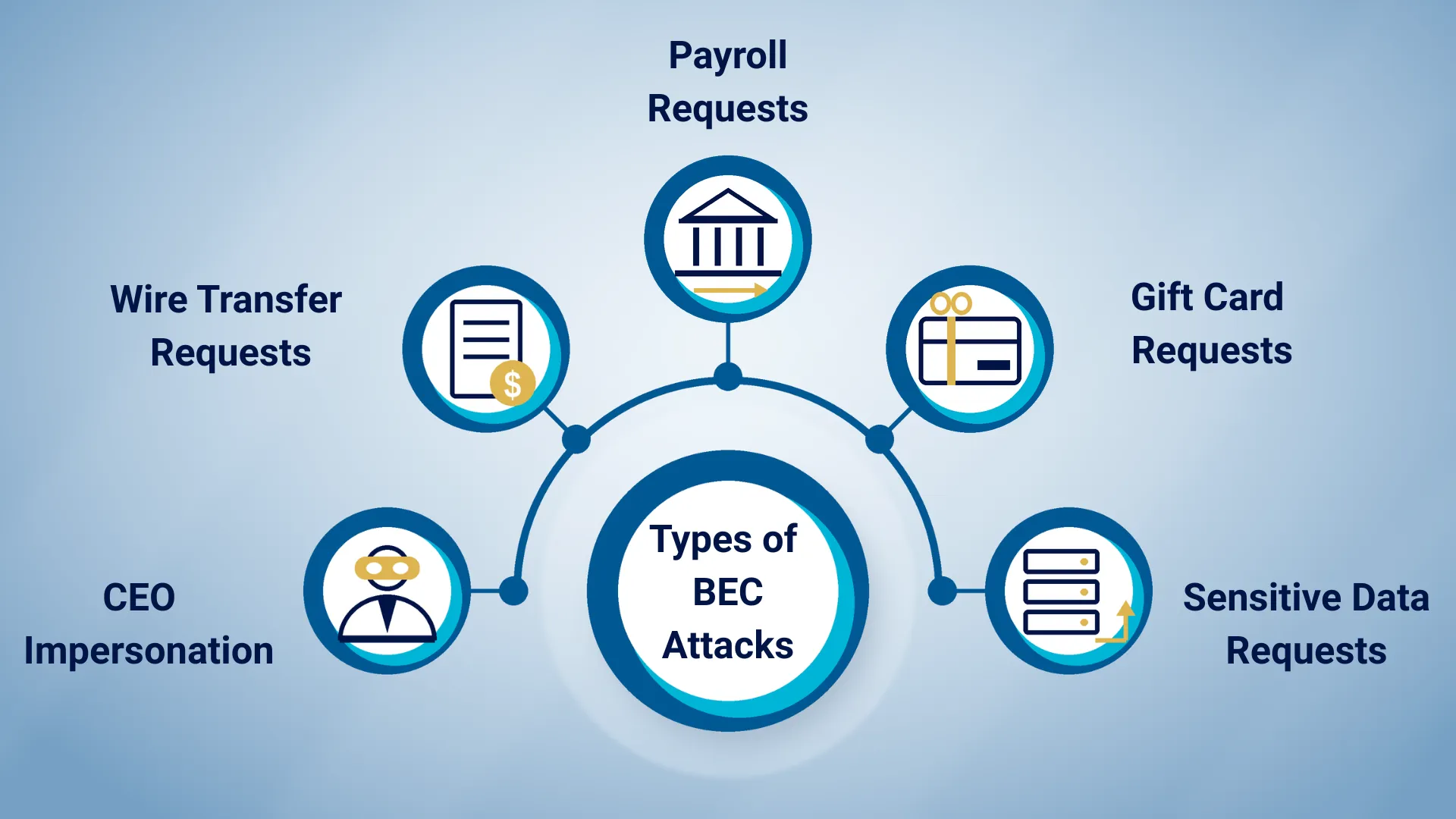
These emails are often structured to create urgency and trigger a quick response before an employee has time to verify the request or its source. With that, criminals commonly impersonate:
- CEOs and business owners
- Executives and department leaders
- Vendors and suppliers
- Human resources personnel
- Financial institutions
- Clients and customers
AI Is Raising the Stakes
Historically, phishing attempts were easier to spot because of poor grammar, awkward wording, and obvious red flags.
That has changed.
Generative AI tools have enabled attackers to create authentic-looking messages at scale. In many cases, emails can mimic the communication style of executives and trusted contacts, making fraudulent requests significantly harder to detect.
“These attacks are polished by design,” said Schlechter. “It puts a lot more onus on employee awareness and verification procedures.”
What Businesses Can Do Right Now
Bit-Wizards recommends organizations establish procedures requiring employees to independently verify requests involving:
- Payments or wire transfers
- Banking changes
- Sensitive personnel data
- Financial records
- Urgent requests from executives
Beyond verification procedures, Bit-Wizards can help organizations implement additional safeguards, including:
- Enabling Multifactor Authentication (MFA)
- Providing ongoing security awareness training
- Implementing advanced email filtering
- Establishing out-of-band verification procedures for financial transactions
- Regularly testing employees through simulated phishing exercises
Protecting Businesses Across Northwest Florida
For the last 25 years, Bit-Wizards has partnered with over 500 businesses across Northwest Florida, providing Managed IT Services that strengthen cybersecurity defenses, improve employee security awareness, and reduce exposure to modern threats such as Business Email Compromise, phishing, ransomware, and social engineering attacks.
To learn how Bit-Wizards can help identify business vulnerabilities and strengthen its defenses against BEC attacks, get in touch.